

- Home
-

Why Choose Upset Forged Rebar Couplers for Heavy-Duty Construction Projects?
Views: 0 Author: Site Editor Publish Time: 2026-08-27 Origin: Site


Modern heavy-duty infrastructure pushes structural limits. High-rises, nuclear plants, and bridges require robust reinforcement to handle extreme dynamic loads. Traditional rebar lapping creates severe bottlenecks in these high-stress zones. Engineers and contractors face a dual challenge on every major site. First, dense steel congestion blocks concrete consolidation, leading to voids and weak points within the structure. Second, achieving guaranteed tensile strength under seismic activity is mandatory, but simply adding more steel compromises architectural design and constructability. Mechanical splicing replaces lapped joints as the standard for critical structural connections. Specifically, the upset forging method provides a verifiable, bar-break performance standard. It clears up rebar cages, enhances site safety, and gives structural engineers the design flexibility needed for complex frameworks.
Structural Superiority: Upset forging enlarges the rebar end before threading, ensuring the cross-sectional area of the thread exceeds the parent bar, guaranteeing 100% bar-break performance.
Congestion Reduction & Design Flexibility: Replacing lapped joints with mechanical couplers significantly decreases steel-to-concrete ratios, enabling optimal concrete flow, reduced column section sizes, and broader architectural flexibility.
Environmental Resilience: Utilizing specialized coatings (epoxy, galvanization) on couplers prevents premature joint failure in corrosive or marine environments.
Cost-to-Value Ratio: While mechanical splicing requires upfront investment in equipment and components, it yields net savings through reduced steel tonnage, minimized scrap waste, faster assembly times, and lowered long-term liability.
Enhanced Site Safety: Mechanical splicing eliminates hazardous protruding rebar and removes the need for specialized, high-risk on-site welding.
The Engineering Problem: Limitations of Lapping in Heavy-Duty Projects
Steel Congestion and Concrete Consolidation Failures
Traditional lapping doubles the steel density within splice zones. This creates a physical barrier inside the formwork. Consider a heavily reinforced 1000x1000mm column utilizing 32mm rebar. When you lap these bars, you instantly place 64mm of steel side-by-side. Add the necessary transverse ties and stirrups, and the clear spacing between bars shrinks drastically. When pouring concrete into this dense matrix, large aggregate particles—often 20mm to 40mm in diameter—get blocked by the steel mesh. The aggregate bridges the gaps, preventing the cement paste from flowing through.
This blockage leads to severe honeycombing and hidden voids within the concrete core. Structural integrity drops significantly when concrete cannot fully encapsulate the rebar. Success in heavy-duty projects relies on maintaining clear spacing. You must allow concrete to flow freely while still meeting stringent load-bearing codes. Mechanical splicing removes the extra bulk of lapped bars. It opens up the reinforcement cage, allowing mechanical vibrators to penetrate deeply and ensuring perfect concrete consolidation around every single bar.
Structural Inefficiencies Under Dynamic Loads
Lapped joints are inherently unreliable under dynamic stress. Seismic events, cyclic loading, and blast forces apply violent push-pull actions to the structure. A lapped joint relies entirely on the surrounding concrete's bond strength to transfer these loads between the two overlapping bars. The steel does not connect directly. If the concrete cracks, spalls, or degrades during an earthquake, that bond vanishes instantly. The lap splice fails, and the structural element loses its load-bearing capacity.
Heavy load structures require a mechanical connection that behaves as a single, continuous piece of reinforcing steel. Mechanical couplers do not rely on concrete for load transfer. They provide raw, independent tensile strength. This ensures the reinforcement framework remains intact and continues to hold the building together even if the surrounding concrete suffers severe damage during a seismic event.
Architectural Flexibility and Section Size Constraints
The physical space required for traditional lapping forces structural engineers to design larger, bulkier concrete columns. You have to accommodate the overlapping steel while maintaining strict minimum concrete cover requirements to prevent corrosion. This directly impacts the architectural layout of the building. Bulky columns consume valuable floor space in high-rise commercial developments and residential towers.
Eliminating lap splices allows engineers to reduce concrete section sizes significantly. You can design slimmer columns and thinner shear walls without sacrificing load capacity. This maximizes usable floor space and offers architects greater overall flexibility in their design options. It streamlines the transition between different structural zones across the building, allowing for more elegant and efficient structural framing.
The Mechanics of the Upset Forging Parallel Thread Coupler
The Upset Forging Process Explained
The upset forging process physically alters the geometry of the rebar end before threading begins. This is a multi-step mechanical operation performed either on-site or in a prefabrication facility. First, a specialized saw cuts the rebar end perfectly square. Next, a hydraulic forging machine grips the bar and applies immense axial pressure to the tip. This cold forging action bulges the steel outward, increasing its overall diameter at the end of the bar.
Once the end is enlarged, a threading machine cuts parallel threads into this thicker section. This specific method prevents the inherent weakening caused by standard thread cutting. In standard cutting, removing steel reduces the cross-sectional area below that of the parent bar, creating a weak point. With an upset forging parallel thread coupler, the thread root diameter remains larger than the main bar. This guarantees that under extreme tension, the parent bar will yield and break before the threaded joint ever fails.
Parallel Threads vs. Tapered Threads
Thread geometry dictates how stress distributes across the mechanical splice. Parallel threads offer distinct advantages over tapered systems in heavy-duty applications. Tapered threads concentrate stress at the narrowest point of the connection, which can lead to premature failure under cyclic loading. Parallel threads distribute tensile loads evenly across the entire engaged length of the coupler.
Furthermore, parallel systems are highly forgiving during on-site assembly. They offer easier installation and superior accuracy in alignment. Workers do not need to apply massive torque to lock the joint, reducing the risk of cross-threading or damaging the coupler body during installation.
Feature
Parallel Thread Couplers
Tapered Thread Couplers
Stress Distribution
Evenly distributed across all engaged threads.
Concentrated at the narrowest thread points.
Installation Torque
Low torque required; easy hand-tightening followed by a standard wrench.
High torque required to lock the taper; requires specialized heavy wrenches.
Alignment Tolerance
High tolerance; easy to align heavy bars even in tight spaces.
Low tolerance; highly prone to cross-threading if bars are slightly misaligned.
Cross-Sectional Area
Larger than parent bar (when upset forged), ensuring bar-break.
Reduces parent bar diameter at the thread root, creating a potential weak point.
Visual Inspection
Simple visual check to ensure no threads are exposed outside the coupler.
Difficult to verify full engagement visually; relies heavily on torque verification.
Evaluation Dimensions: Performance, Compliance, and Resilience
Achieving Type 2 Mechanical Splice Compliance
Heavy-duty construction demands strict adherence to international building codes. A coupler must meet or exceed standards like ACI 318 Type 2, BS 8110, or ISO 15835. Type 2 mechanical splices are mandatory in high-seismic zones. The code requires the splice to develop at least 125% of the specified yield strength of the rebar. It must also survive rigorous cyclic testing to simulate the violent push-and-pull conditions of an earthquake.
Upset forged parallel thread systems consistently exceed these metrics. Because the forged end is thicker, the connection acts stronger than the bar itself. During destructive laboratory testing, the rebar will stretch and snap in the middle, leaving the mechanical splice completely intact. This compliance provides structural engineers with absolute confidence when designing critical load paths in nuclear facilities, high-rise towers, and suspension bridges.
Mitigating Environmental Degradation
Infrastructure exposed to harsh environments faces rapid degradation. De-icing salts on bridges, chemical exposure in industrial plants, and high humidity in coastal regions accelerate steel corrosion. When rebar rusts, it expands up to seven times its original volume. This expansion causes the concrete cover to spall, crack, and eventually fall away, exposing more steel to the elements. Protecting the mechanical splice is critical to extending the lifecycle of the entire structure.
Utilizing a corrosion resistant parallel thread rebar coupler blocks moisture and chlorides from attacking the thread engagement zone. This targeted protection ensures the joint maintains its structural integrity decades after initial construction. Underground infrastructure, such as subway tunnels and deep foundations, also benefits heavily from this resistance, as groundwater and soil acidity constantly threaten bare steel connections.
Specialized Coating Applications
Different environments require specific protective coatings to prevent joint failure. Applying the wrong coating, or mixing bare steel with coated steel, can accelerate structural decay.
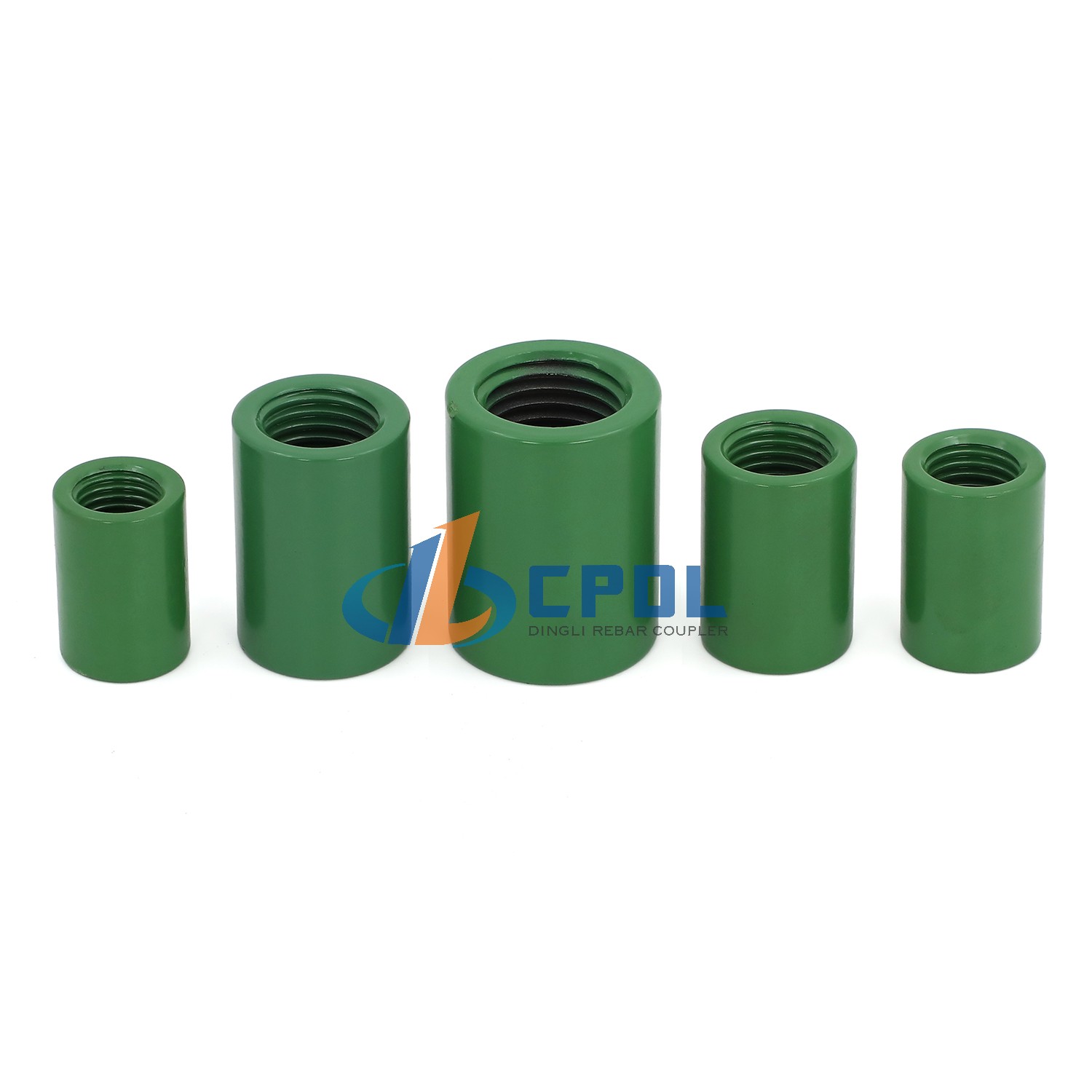
Epoxy Coatings: Bridge decks, parking structures, and wastewater treatment plants often use epoxy-coated rebar networks to fight chloride ingress. You must mandate an epoxy coated upset forging parallel thread coupler in these scenarios. Mixing bare steel couplers with coated rebar triggers rapid galvanic corrosion. The bare steel acts as an anode and rusts aggressively. The epoxy coating isolates the steel, preventing chloride ions from initiating the rusting process.
Galvanization: Marine environments demand robust protection against saltwater spray and tidal zones. A galvanized upset rebar coupler provides a sacrificial zinc layer. The zinc corrodes first, actively protecting the underlying steel. This is essential for seawalls, piers, and structures requiring long-term durability in highly aggressive coastal conditions where epoxy might chip during heavy handling.
Value Influencing Factors: Trade-offs, Scalability, and Safety
Material Savings, Waste Reduction, and Upfront Costs
Mechanical splicing requires an initial investment in couplers and threading machinery. However, this upfront cost is rapidly offset by massive material savings. Eliminating lap length steel often saves 15% to 20% of the total rebar tonnage on a project. Consider a project using 32mm rebar. A standard lap splice might require 1.5 meters of overlap. If a high-rise requires 10,000 splices, lapping wastes 15,000 meters of heavy rebar. You no longer pay for redundant steel that only serves to transfer loads through concrete.
Beyond direct tonnage savings, upset forging drives secondary economic benefits. It drastically reduces scrap waste on site. Bars can be cut to exact lengths without factoring in long lap overlaps. This optimizes inventory management and reduces the logistical burden of transporting excess steel to the site. Less steel on site means fewer trucks, less crane time for unloading, and a smaller laydown yard requirement.
Labor Efficiency, Accuracy, and Prefabrication
Upset forging actively supports modern prefabrication techniques. Off-site facilities can forge and thread rebar with extreme accuracy using automated machinery. Workers can then assemble highly complex rebar cages in a controlled, weather-protected environment. Once transported to the site, these prefabricated cages connect rapidly using parallel thread couplers.
This process severely reduces on-site labor hours. It cuts down expensive crane time, as massive cages are lifted into place and bolted together in minutes rather than hours. Furthermore, it completely eliminates the need for specialized, high-risk on-site welding. Welding rebar requires certified welders, fire watches, and perfect weather conditions. Mechanical splicing requires only basic hand tools and brief training. Faster assembly times directly accelerate the overall construction cycle, allowing subsequent trades to begin work sooner.
Enhancing On-Site Construction Safety
Traditional lapping creates significant safety hazards. Long, protruding starter bars stick out of concrete slabs, posing severe impalement risks to workers moving around the site. Standard plastic mushroom caps often fail to prevent injury during a heavy fall. Mechanical couplers eliminate this hazard entirely. You can install flush-mounted couplers at the concrete surface, removing all protruding steel until the next phase of construction begins.
Additionally, mechanical splicing offers major ergonomic benefits. Laborers no longer have to manually wrestle and wire-tie dense, heavy lapped sections in confined spaces. Tying 32mm or 40mm rebar by hand causes severe strain on the back, shoulders, and wrists. Threading a coupler requires minimal physical strain. Workers simply align the bars and spin the coupler into place, drastically reducing workplace fatigue and associated musculoskeletal injuries.
Implementation Risks and Quality Assurance
Equipment Calibration and Threading Precision
The reliability of an upset forged splice depends entirely on manufacturing precision. Poorly calibrated forging presses or threading machines lead to catastrophic failures. If the threads are cut too shallow, or the bar is not forged to the correct diameter, the threads will strip under tension. Incomplete engagement compromises the entire joint, turning a structural connection into a fatal weak point.
To mitigate this risk, site managers must enforce strict daily machine calibration. Operators must use calibrated go/no-go gauges on every single threaded bar. These gauges instantly verify that the thread pitch, depth, and diameter fall within exact engineering tolerances before the bar ever reaches the pour zone. If a bar fails the gauge test, workers must cut the end off and re-forge it immediately.
On-Site Inspection and Testing Protocols
Robust quality assurance frameworks are non-negotiable on heavy-duty projects. Inspectors must conduct thorough visual inspections of every mechanical splice before signing off on the concrete pour. They must verify full thread engagement. The standard rule for parallel thread couplers is simple: no exposed threads should remain visible outside the coupler body once tightened.
Beyond visual checks, destructive tensile testing is mandatory. Project specifications must dictate the frequency of pull-tests required per batch of threaded bars. A common standard requires cutting out and testing one splice for every 500 installed on site. These tests pull the assembled joint apart in a laboratory setting to verify true bar-break performance. Documenting these results ensures full compliance with structural codes and protects the project from future liability.
Visual Inspection: Check every joint to ensure zero exposed threads remain outside the coupler housing.
Torque Verification: Apply a calibrated torque wrench to a random sample of joints to ensure proper tightening.
Batch Sampling: Select one completed splice per designated batch size (e.g., 1 in 500) for destructive testing.
Laboratory Pull-Test: Subject the sample to axial tension until failure, verifying the parent bar breaks before the threads strip.
Documentation: Record all gauge checks, torque values, and lab results in the daily site log for the engineer of record.
Conclusion
Upset forged parallel thread couplers represent the technically superior choice for heavy-duty construction. They eliminate the inherent vulnerabilities of traditional lapping, reduce concrete section sizes, and guarantee structural integrity under dynamic loads. By forging the rebar end before threading, this system ensures the joint is always stronger than the parent bar. Decision-makers should select coupler systems based on specific environmental exposures, specifying epoxy or galvanized variants where necessary. Always demand verifiable compliance with localized seismic codes from your manufacturer to ensure the safety and longevity of the structure.
Take the following actionable steps to integrate this technology into your next project:
Request comprehensive technical data sheets and compliance certificates from shortlisted coupler manufacturers.
Schedule a pilot pull-test with a supplier to physically verify bar-break performance on your specific rebar grade.
Consult with your structural engineer of record to update project specifications and detail exact coupler variants.
Establish a mandatory daily machine calibration and go/no-go gauging protocol for your on-site threading teams.
FAQ
Q: What is the difference between an upset forging parallel thread coupler and a standard roll-threaded coupler?
A: An upset forging coupler enlarges the rebar end before cutting threads. This ensures the threaded section remains thicker than the parent bar, guaranteeing the bar breaks before the joint fails. Standard roll-threading compresses the existing bar diameter. This process slightly reduces the cross-sectional area and lowers the overall tensile capacity of the connection.
Q: When should a structural engineer specify an epoxy coated upset forging parallel thread coupler?
A: Engineers specify epoxy-coated couplers when designing structures with epoxy-coated rebar networks in highly corrosive environments. Common applications include bridge decks, parking garages, and wastewater treatment plants. The coating prevents chloride penetration and stops the galvanic corrosion that rapidly occurs when bare steel components mix with coated steel reinforcement.
Q: Do upset forged couplers meet ACI 318 Type 2 mechanical splice requirements for seismic zones?
A: Yes. Upset forged parallel thread couplers consistently meet and exceed ACI 318 Type 2 requirements. Manufacturers engineer these connections to develop at least 125% of the specified yield strength of the rebar. They perform reliably under severe cyclic loading, ensuring structural stability during major seismic events.
Q: How does a galvanized upset rebar coupler perform in marine and coastal construction environments?
A: Galvanized couplers perform exceptionally well in marine environments. The zinc coating acts as a sacrificial anode. It corrodes first, actively protecting the underlying steel from aggressive saltwater spray, tidal moisture, and high-chloride exposure. This sacrificial protection significantly extends the lifespan of the mechanical splice and the surrounding concrete.
Q: What makes a corrosion resistant parallel thread rebar coupler necessary for underground infrastructure?
A: Underground infrastructure faces constant exposure to groundwater, soil acidity, and stray electrical currents. A corrosion-resistant coupler prevents these elements from attacking the mechanical splice. Protecting the joint ensures the foundation, retaining wall, or tunnel maintains its original load-bearing capacity over decades of harsh subterranean exposure.
Q: How do mechanical couplers improve on-site construction safety compared to traditional lapping?
A: Mechanical couplers eliminate protruding starter bars, which act as severe impalement hazards on site. They allow contractors to create flush connections at the concrete surface. Additionally, they reduce ergonomic strain. Workers no longer have to manually lift, wrestle, and wire-tie heavy, dense lapped rebar sections in confined spaces.
SUBSCRIBE TO OUR NEWSLETTERProfessional manufacturer of high-quality rebar couplers in China. We provide reliable, durableand cost-effective rebar connecting solutions for construction projects worldwide.- CUSTOM GOODS
- ABOUT CPDL
- GET IN TOUCH +86-13371462215 Xinfa Ind, Area, Chiping, LiaochengCity , Shandong Province, China
- SOCIAL FOLLOW
 English


