

- Home
-

Top Applications of Threaded Rebar Couplers in Construction Projects
Views: 0 Author: Site Editor Publish Time: 2026-07-30 Origin: Site


Heavy civil and high-rise projects demand massive structural load capacities, exposing the physical and mechanical flaws of traditional lap splicing. Relying on overlapping steel bars creates severe rebar congestion within the formwork. This congestion directly blocks aggregate flow, compromising concrete consolidation and leaving dangerous voids. The hidden costs of lap splicing quickly accumulate on the job site through wasted steel tonnage, increased labor hours for tying, complex structural detailing, and significant risks of inadequate load transfer in high-stress zones.
Mechanical splicing has replaced lap tying as the standard for maintaining structural integrity and space efficiency. Specifically, the rib peeling rolling thread coupler provides a verifiable, high-strength connection that solves on-site congestion challenges. By creating a continuous load path, this mechanical connection eliminates the need for overlapping steel, reduces overall building dead load, and streamlines the entire concrete pouring process.
Congestion Reduction & Design Simplification: Mechanical splicing significantly reduces rebar congestion compared to lap splicing, allowing for better concrete flow, structural consolidation, and simplified engineering detailing (eliminating complex lap stagger calculations).
Superior Load Transfer: The rib peeling rolling thread coupler ensures continuous load paths, often delivering tensile strength that exceeds the parent rebar itself.
Critical Applications: These couplers are essential for high-rise columns, shear walls, long-span beams, and heavy infrastructure where space efficiency and dynamic load resistance are non-negotiable.
Vendor Due Diligence: Partnering with a certified threaded rebar coupler manufacturer is critical to mitigating supply chain risks and ensuring strict compliance with international building codes (e.g., ACI, Eurocode, ISO).
The Structural Problem: Why Lap Splicing Fails in Modern Concrete Construction
The baseline requirements for any structural rebar connection include continuous load transfer, minimal concrete displacement, and high labor efficiency. Traditional lap splicing struggles to meet these criteria in heavily reinforced structures. When engineers design complex load-bearing elements, the reliance on overlapping steel fundamentally alters the physical space available within the formwork. You end up with a dense cage of steel that fights against the concrete rather than working with it.
Rebar congestion directly impedes proper concrete consolidation. Overlapping rebar in dense zones, such as beam-column joints or heavy mat foundations, prevents proper aggregate flow. When the aggregate cannot navigate through the tight spaces between the steel bars, it leads to honeycombing and structural voids. These voids create weak points in the concrete matrix. Fixing these defects requires expensive and time-consuming epoxy injections or structural patching after the formwork is stripped, delaying the project schedule.
Material waste is another massive failure point of lap splicing. The amount of steel wasted in lap zones is substantial, especially when working with large-diameter rebar. For instance, overlapping #8, #10, or #11 bars requires significant lengths of steel simply to transfer the load through the surrounding concrete. This redundant steel inflates the overall project budget and unnecessarily increases the building's dead weight. Structural engineers are then forced to design larger, more expensive foundations to support the extra mass of the wasted steel.
In seismic zones, the structural limitations of lap splices become a severe liability. Lap splices rely entirely on the bond between the steel and the surrounding concrete to transfer loads. Under cyclic loading during an earthquake, the concrete cover can spall off. Once the cover is gone, the load transfer mechanism is instantly destroyed, leading to catastrophic failure. Consequently, structural engineers are rapidly moving away from lap splices in high-seismic regions, favoring mechanical connections that perform independently of the concrete's condition.
The design and detailing complexity associated with lap splicing also places a heavy burden on engineering teams. Calculating precise lap lengths, managing stagger patterns to avoid weak planes, and ensuring code compliance in highly reinforced sections consumes valuable design hours. Field execution becomes equally complex. Ironworkers must meticulously measure and tie these staggered laps, increasing the margin for human error and slowing down the critical path.
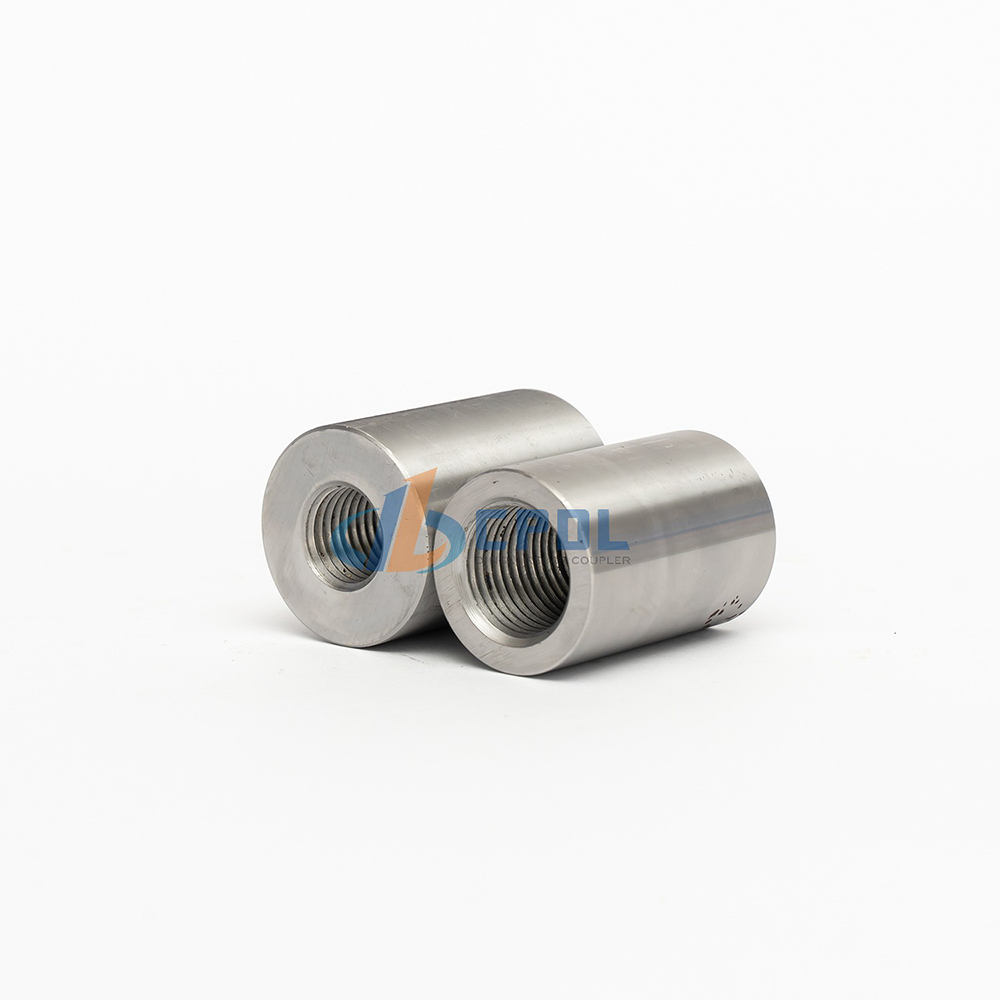
Evaluating Mechanical Splicing: The Rib Peeling Rolling Thread Coupler
Mechanical splices generally fall into three main categories: grout-filled, friction-welded, and threaded. Grout-filled sleeves require precise injection and curing time, which slows down vertical progression. Friction welding is highly specialized, requires massive equipment, and is difficult to execute in the field. Threaded connections have become the industry preference due to their reliability, speed of assembly, and verifiable strength.
The mechanism of action for the rib peeling rolling thread coupler involves a highly controlled engineering process. First, specialized equipment strips the longitudinal and transverse ribs from the end of the rebar. Next, the machine cold-rolls the threads onto the peeled section. This cold-rolling process is critical because it maintains the rebar's core cross-sectional area while simultaneously increasing the surface hardness of the threaded portion through work hardening. The result is a precise, robust thread that perfectly matches the internal threads of the threaded rebar coupler.
Tensile strength and load transfer efficiency are the ultimate tests of any mechanical splice. Structural codes mandate a "bar break" requirement, meaning the mechanical splice must demonstrate a tensile strength greater than the specified ultimate tensile strength of the parent rebar. When tested to failure, the rebar itself must yield and break outside the splice zone before the coupler or the threaded connection fails. The rib peeling rolling method consistently achieves this standard, ensuring the structural integrity of the connection.
Cold-rolled threaded connections offer a distinct comparative advantage over cut-thread or wedge-locking alternatives. Cutting threads physically removes steel, reducing the effective cross-sectional area and creating stress risers that compromise fatigue resistance. Cold rolling displaces the steel rather than cutting it, preserving the bar's diameter and enhancing its resistance to dynamic and cyclic loads. This makes it the superior choice for heavy civil applications.
Top Applications for Threaded Rebar Couplers in Concrete Construction
High-Rise Columns and Core Shear Walls
In high-rise construction, vertical load transfer is paramount. Engineers must transfer massive compressive and tensile forces down to the foundation without increasing the column cross-section, which would reduce usable floor space. A rebar coupler allows for this continuous vertical load transfer without the congestion of lap splices. Threaded couplers enable rapid vertical progression, allowing crane operators and ironworkers to quickly align and connect heavy reinforcement cages, significantly accelerating the floor-to-floor construction cycle.
Bridge Piers and Heavy Infrastructure
Bridge piers and infrastructure projects endure constant dynamic and high-fatigue loads from traffic, wind, and seismic activity. The mechanical splice must maintain its integrity under these relentless forces. Threaded couplers excel in these environments due to their superior fatigue resistance. Furthermore, in phased infrastructure construction, rebar often needs to be left exposed for future extensions. Couplers allow these exposed ends to be protected with plastic caps and easily connected months or years later without the need for destructive concrete chipping.
Foundation Rafts, Thick Slabs, and Long-Span Beams
Massive concrete pours require continuous reinforcement to manage shrinkage and thermal stresses. In foundation rafts and thick slabs, eliminating lap lengths reduces overall steel tonnage dramatically. This reduction not only saves material costs but also simplifies the placement of the top-mat reinforcement. In long-span beams, mechanical splices accelerate assembly by allowing ironworkers to connect standard lengths of rebar end-to-end, maintaining the structural continuity required to resist significant bending moments.
Precast Concrete Connections
The precast concrete industry relies heavily on efficient on-site assembly. Threaded rebar couplers play a critical role in joining precast columns, beams, and wall panels. They provide the speed of assembly necessary to keep crane time to a minimum while offering the precision required to manage tight tolerances between precast elements and structural frames. The use of positional couplers allows precast elements to be connected even when neither piece can be rotated.
To execute a proper mechanical splice in the field, ironworkers follow a specific sequence:
Inspect the pre-threaded rebar ends for any damage or debris in the threads.
Thread the coupler onto the fixed rebar end until it reaches the center stop mark.
Align the continuation rebar and thread it into the open end of the coupler.
Use a calibrated torque wrench to tighten the connection to the manufacturer's specified torque value.
Mark the completed splice with paint to indicate it has been torqued and inspected.
Evaluation Dimensions: Choosing the Right Rebar Coupler for Your Project
Selecting the appropriate mechanical splice requires a rigorous evaluation of code compliance, installation logistics, and safety implications. A reliable threaded rebar coupler for concrete construction must meet stringent international testing standards.
Code compliance is the first hurdle. The coupler must carry certifications such as ACI 318 Type 1 and Type 2, BS 8110, or ISO 15835. Type 2 certification is particularly crucial for seismic zones, as it dictates that the splice can develop the specified tensile strength of the rebar under cyclic loading conditions.
A common misconception in the field is that threading rebar is extra work. However, when comparing the controlled, mechanized threading process and quick torque-wrench assembly against the physical toll, time, and complexity of tying heavy-gauge lap splices, mechanical splicing is vastly more efficient. Tying large-diameter rebar requires significant manual labor and time, whereas a threaded connection can be secured in seconds.
Evaluation Criteria
Lap Splicing
Threaded Rebar Couplers
Code Compliance
Limited in high-seismic zones
Meets ACI Type 1 & Type 2 standards
Installation Speed
Slow, labor-intensive tying
Fast, mechanized assembly
Site Congestion
High (doubles steel in lap zones)
Low (maintains single bar profile)
Concrete Consolidation
Poor in dense zones
Excellent aggregate flow
Load Transfer
Dependent on concrete bond
Independent mechanical connection
Equipment and site logistics must be planned carefully. On-site rib peeling and thread rolling machines require a dedicated footprint and stable power supply. Alternatively, rebar can be pre-threaded off-site at a fabrication facility, which streamlines site logistics but requires precise detailing and inventory management to ensure the correct bars arrive at the right time.
Site safety and ergonomics improve significantly with mechanical splicing. Protruding rebar hazards are minimized, reducing tripping risks and the potential for impalement. Crews handle shorter, lighter lengths of steel, decreasing the physical strain and the likelihood of musculoskeletal injuries associated with wrestling long, heavy bars into lap positions.
Cost-to-Value Trade-Offs in Mechanical Splicing
Evaluating mechanical splicing requires looking beyond the initial unit cost of the coupler. The upfront cost of purchasing couplers and operating threading equipment is rapidly offset by the substantial reduction in steel purchased. Calculating the break-even point involves comparing the cost of the mechanical splice assembly against the cost of the wasted steel in a traditional lap zone. For large-diameter bars, this break-even point is achieved almost immediately.
Dead load reduction is a secondary but highly impactful financial benefit. Eliminating excess lap-splice steel contributes to a lighter building overall. A lighter superstructure reduces the load demands on the foundation, potentially allowing for smaller footings, fewer piles, and reduced concrete volume, generating significant savings across the entire structural package.
Labor efficiency must be weighed against equipment investment. While threading machines require capital expenditure or rental fees, the reduction in on-site tying labor is drastic. Ironworkers spend less time wrestling steel and more time advancing the critical path of the project. This acceleration in the construction schedule translates directly to reduced overhead costs and faster project delivery.
Furthermore, mechanical splicing aligns with modern project sustainability goals. By reducing the total volume of steel required, the project lowers its embodied carbon footprint. This efficient use of materials supports LEED and other green building certifications, adding long-term value to the asset.
Implementation Risks and Mitigation Strategies
While mechanical splicing offers superior performance, execution risks exist and must be managed through strict quality control protocols.
Threading precision is the most critical factor. Improper thread depth or pitch will prevent the coupler from engaging correctly or compromise the connection's strength. To mitigate this risk, contractors must implement strict daily calibration of the rolling machines. Furthermore, mandatory go/no-go gauge testing must be conducted on-site for every batch of threaded bars to ensure dimensional accuracy before installation.
Managing tolerances and alignment in the field can be challenging, particularly with heavy, pre-threaded rebar cages. If bars are slightly misaligned, threading standard couplers becomes difficult. The mitigation strategy involves utilizing positional or transitional couplers. These specialized couplers are designed with extended internal threads or rotating sleeves, allowing connections to be made even when the rebar cannot be turned or when there are slight alignment deviations.
Finally, vetting your threaded rebar coupler manufacturer is paramount. A strict checklist for evaluating suppliers should focus on raw material traceability, comprehensive batch testing reports, and verified production capacity. Ensure the manufacturer holds ISO 9001 certification to guarantee consistent quality management and to avoid the severe structural risks associated with counterfeit or substandard steel components.
Conclusion
While traditional lap splicing remains viable for low-stress, small-diameter applications, the rib peeling rolling thread coupler is a structural, logistical, and economic necessity for high-capacity, congested concrete construction. It solves the fundamental problems of rebar congestion, poor concrete consolidation, and excessive material waste.
Procurement and engineering teams should base their selection on verified tensile performance, specifically demanding Type 2 seismic compliance for critical structures. The decision between on-site and off-site threading must be driven by logistical feasibility and site constraints, always prioritizing the documented reliability of the chosen manufacturer.
To optimize your next concrete structure, take the following actions:
Request technical data sheets and third-party tensile testing reports from potential suppliers.
Conduct a comprehensive cost-benefit analysis comparing the steel tonnage savings against the mechanical splicing costs based on your specific project blueprint.
Implement rigorous on-site quality control measures, including daily machine calibration and go/no-go gauge testing.
Specify positional couplers in your detailing for areas where rebar rotation is impossible.
FAQ
Q: What is a rib peeling rolling thread coupler?
A: It is a mechanical splicing device that connects two pieces of rebar. The process involves stripping the rebar's outer ribs and cold-rolling threads onto the ends. This method preserves the rebar's cross-sectional area and increases surface hardness, ensuring maximum tensile strength for the connection.
Q: How does a threaded rebar coupler compare to lap splicing in overall cost?
A: While purchasing couplers and threading equipment involves upfront costs, these are quickly offset by the savings from reduced steel tonnage. Eliminating lap zones saves significant material and reduces the building's dead load, which can lower foundation costs and accelerate construction schedules.
Q: Are threaded rebar couplers approved for use in high seismic zones?
A: Yes, provided they meet specific testing standards. For high seismic zones, couplers must achieve ACI Type 2 certification, meaning the mechanical splice can develop the specified tensile strength of the rebar and withstand cyclic loading without failure.
Q: Can threaded couplers be used to connect different diameters of rebar?
A: Yes. Transitional couplers are specifically manufactured with different thread sizes on each end to securely connect rebars of varying diameters, maintaining a continuous load path through the transition zone.
Q: What happens if the rebar cannot be rotated during installation?
A: When connecting pre-tied cages or precast elements where the rebar cannot be spun, positional couplers are used. These feature an extended thread and a lock nut, allowing the coupler sleeve to rotate and bridge the gap between the stationary bars.
Q: How is the quality of the threaded connection verified on site?
A: Quality is verified using go/no-go gauges to check thread dimensions immediately after rolling. During installation, workers use calibrated torque wrenches to ensure the coupler is tightened to the manufacturer's specified torque value.
SUBSCRIBE TO OUR NEWSLETTERProfessional manufacturer of high-quality rebar couplers in China. We provide reliable, durableand cost-effective rebar connecting solutions for construction projects worldwide.- CUSTOM GOODS
- ABOUT CPDL
- GET IN TOUCH +86-13371462215 Xinfa Ind, Area, Chiping, LiaochengCity , Shandong Province, China
- SOCIAL FOLLOW
 English


