

- Home
-

One Touch Rebar Coupler: A New Generation of Mechanical Rebar Splicing Technology
Views: 0 Author: Site Editor Publish Time: 2026-07-22 Origin: Site


The construction industry has continuously searched for faster, safer, and more efficient methods to connect reinforcement bars. Traditional rebar connection methods such as lap splicing, welding, and threaded couplers have been widely used for decades. However, with the increasing complexity of modern construction projects, these traditional methods often create challenges including high labor costs, slow installation speed, equipment requirements, and inconsistent connection quality.
The One Touch Rebar Coupler is an innovative mechanical rebar connection system designed to solve these problems. By using a push-fit and automatic locking mechanism, One Touch Couplers allow workers to connect reinforcing bars quickly without threading machines, welding equipment, or special installation tools.
This advanced rebar splicing technology is becoming increasingly popular in high-rise buildings, bridges, tunnels, precast concrete structures, and other large-scale infrastructure projects.
What Is a One Touch Rebar Coupler?
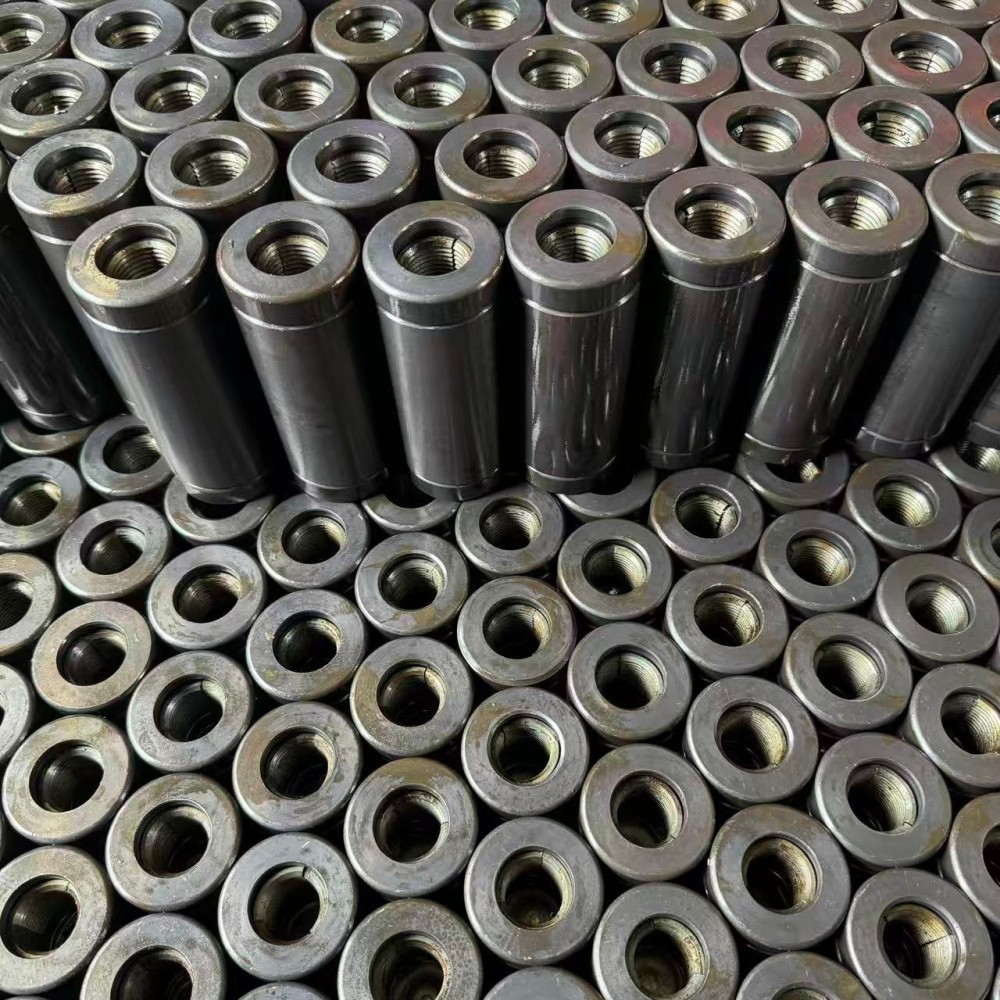
A One Touch Rebar Coupler is a mechanical device used to join two reinforcement bars together through a simple insertion and locking process.
Unlike conventional threaded rebar couplers, which require the ends of steel bars to be processed with threads before installation, One Touch Couplers use an internal locking structure that automatically grips the reinforcement bar after insertion.
The basic concept is simple:
One reinforcement bar is inserted into one side of the coupler.
The second reinforcement bar is inserted from the opposite side.
Internal wedges, gripping rings, or locking components engage with the steel surface.
The connection becomes mechanically fixed and capable of transferring tensile and compressive forces.
Because installation requires only a simple push action, this technology is also known as:
Push-fit rebar coupler
Instant mechanical rebar splice
Fast rebar connection system
Zero-equipment rebar coupler
How Does a One Touch Coupler Work?
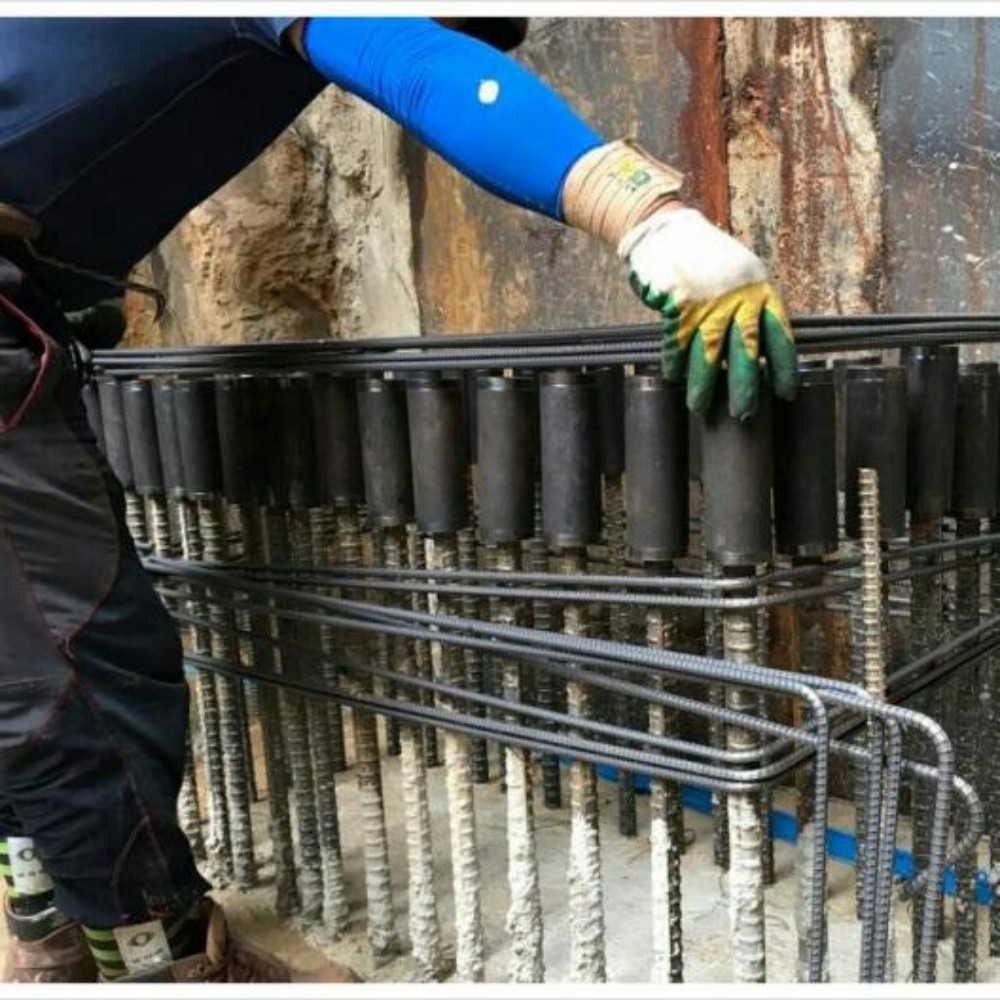
The working principle of a One Touch Rebar Coupler is based on mechanical anchoring.
Inside the coupler body, specially designed locking components create a strong connection between the coupler and the reinforcement bar.
When the rebar is pushed into the coupler:
1. Initial Insertion
The reinforcement bar enters the coupler sleeve. The internal components allow the bar to move forward easily.
2. Automatic Locking
As the bar reaches the required insertion depth, the internal wedges or gripping elements move into position and tightly hold the steel bar.
3. Load Transfer
When tension or compression forces are applied, the mechanical locking structure transfers the load from one reinforcement bar to the other through the coupler body.
This design eliminates many preparation steps required by traditional systems.
Difference Between One Touch Coupler and Traditional Rebar Connection Methods
One Touch Coupler vs Lap Splicing
Lap splicing is one of the oldest reinforcement connection methods. It connects steel bars by overlapping their lengths inside concrete.
However, lap splicing has several disadvantages:
Requires additional steel consumption
Needs more concrete space
Creates congestion in reinforced areas
Is difficult in large-diameter rebar applications
A One Touch Rebar Coupler provides a direct mechanical connection, reducing steel overlap and improving reinforcement arrangement.
One Touch Coupler vs Welding
Welding reinforcement bars may require:
Skilled workers
Electrical equipment
Additional safety measures
Suitable weather conditions
Problems such as inconsistent welding quality and heat influence on steel properties can affect reliability.
One Touch Couplers remove the need for onsite welding, making installation faster and safer.
One Touch Coupler vs Threaded Couplers
Traditional threaded couplers require:
Rebar end preparation
Thread rolling machines
Skilled operators
Protection of threads during transportation
One Touch Couplers simplify the process by eliminating threading operations.
This makes them especially useful for projects where construction speed is critical.
Key Advantages of One Touch Rebar Couplers
1. Extremely Fast Installation
The biggest advantage of One Touch Couplers is installation speed.
Workers can complete reinforcement connections within seconds without complicated preparation.
Compared with traditional mechanical splicing systems, installation time can be significantly reduced.
This is especially valuable for:
High-rise buildings
Large foundation projects
Precast construction
Emergency repair projects
2. No Special Installation Equipment Required
Many traditional rebar connection methods require:
Threading machines
Welding equipment
Hydraulic tools
One Touch Couplers normally require only basic positioning and inspection tools.
This reduces:
Equipment investment
Maintenance costs
Site preparation time
3. Reduced Labor Requirements
Modern construction projects face increasing labor shortages and rising workforce costs.
Because One Touch Couplers simplify installation, fewer skilled workers are needed.
Workers can quickly learn the installation process, improving productivity on construction sites.
4. Improved Construction Safety
Compared with welding operations, One Touch Couplers provide a safer working environment.
They reduce risks associated with:
Open flames
Electrical equipment
Welding fumes
Hot work permits
This makes them suitable for crowded construction environments and indoor projects.
5. Better Reinforcement Management
In heavily reinforced concrete structures, space is often limited.
Traditional lap splices require additional overlapping lengths, creating reinforcement congestion.
One Touch Couplers allow more compact reinforcement layouts, improving concrete pouring quality.
Common Applications of One Touch Rebar Couplers
High-Rise Buildings
Modern skyscrapers require thousands of reinforcement connections.
One Touch Couplers are widely used in:
Columns
Shear walls
Core structures
Foundation reinforcement
Their fast installation speed helps reduce construction cycles.
Bridges and Transportation Infrastructure
Infrastructure projects require strong and durable reinforcement connections.
Applications include:
Bridge piers
Highway structures
Railway projects
Tunnel reinforcement
Mechanical connections provide reliable load transfer under demanding conditions.
Precast Concrete Construction
Prefabricated construction requires accurate and efficient reinforcement connections.
One Touch Couplers are suitable for:
Precast columns
Precast beams
Concrete panels
Modular buildings
They support faster assembly and factory-controlled production.
Underground Construction
Projects such as:
Metro stations
Underground parking structures
Utility tunnels
often have limited working space.
The compact installation method of One Touch Couplers makes them ideal for restricted environments.
Quality Requirements for One Touch Rebar Couplers
Although One Touch Couplers provide many advantages, product quality is critical.
A reliable coupler should meet requirements including:
Material Quality
The coupler body should provide:
High strength
Good corrosion resistance
Long service life
Common materials include high-strength steel alloys.
Load Performance
A qualified One Touch Coupler should be tested for:
Tensile strength
Yield strength
Slip resistance
Fatigue performance
The connection performance should match or exceed the connected reinforcement bar.
Manufacturing Precision
Internal locking components require accurate manufacturing.
Poor machining quality may affect:
Locking reliability
Installation consistency
Long-term performance
Therefore, selecting an experienced manufacturer is essential.
Why One Touch Rebar Coupler Is Becoming More Popular
The construction industry is moving toward:
Faster construction methods
Prefabrication
Digital construction management
Reduced labor dependency
Sustainable building practices
One Touch Couplers match these trends because they provide a simple, efficient, and reliable reinforcement connection solution.
As cities continue expanding and infrastructure demand increases, mechanical rebar connection technology will become increasingly important.
Future Development of One Touch Coupler Technology
Future improvements may focus on:
Higher strength materials
More compact designs
Automated installation systems
Smart quality monitoring
Wider international certification
With continuous innovation, One Touch Rebar Couplers are expected to become a standard solution for modern reinforcement engineering.
Conclusion: One Touch Rebar Coupler Creates a Faster Future for Construction
The One Touch Rebar Coupler represents a major advancement in reinforcement connection technology.
By combining:
Fast installation
Simple operation
Reduced labor requirements
Improved safety
Reliable mechanical performance
it provides an effective alternative to traditional rebar connection methods.
For contractors, engineers, and developers looking to improve construction efficiency, One Touch Coupler technology offers a practical solution for modern concrete reinforcement projects.
As construction continues to demand higher productivity and better quality control, One Touch Rebar Couplers will play an increasingly important role in the future of global building and infrastructure development.
SUBSCRIBE TO OUR NEWSLETTERProfessional manufacturer of high-quality rebar couplers in China. We provide reliable, durableand cost-effective rebar connecting solutions for construction projects worldwide.- CUSTOM GOODS
- ABOUT CPDL
- GET IN TOUCH +86-13371462215 Xinfa Ind, Area, Chiping, LiaochengCity , Shandong Province, China
- SOCIAL FOLLOW
 English


